In How to Win the Premier League, Liverpool’s former director of research Ian Graham distills a truth that sits at the heart of elite football: the players win the games, not the whiteboard. It’s a provocative claim from a man who built his career on data models, tactical algorithms, and recruitment analytics — and yet it echoes almost word for word what the game’s most decorated coaches have been saying for decades. Tactics create the stage. World-class players are the performance. And increasingly, the coaches who win the most are the ones who understand that their real job isn’t drawing arrows on a screen — it’s managing minds.
“90 percent of the time you will win”
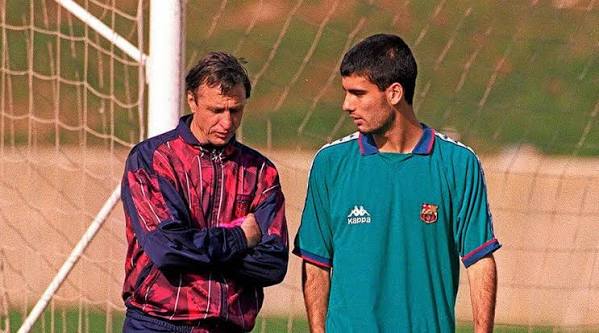
Few people have earned the right to make that argument more than Johan Cruyff. The Dutch master, who reshaped football as both a player and a coach, was characteristically blunt about where victories actually come from: if your players are better than the opposition, he argued, you will win nine times out of ten. Not the system. Not the shape. The players.
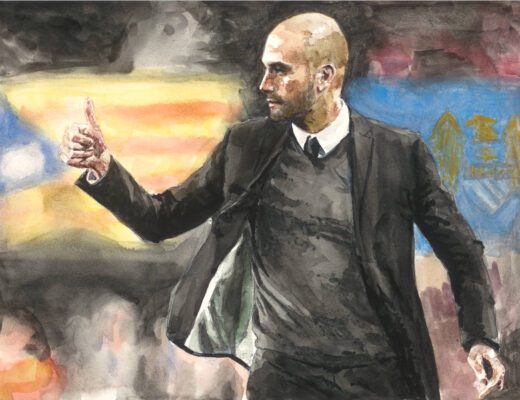
Pep Guardiola, arguably the most decorated tactician of his generation, has made the same case about his own career — often to the visible discomfort of journalists expecting him to take the credit. He has repeatedly stressed that the game’s biggest tactical “secrets” — where the space is, how to exploit it — are, in his words, largely theatre; the real decisions on the pitch belong entirely to the players who make them, over and over, under pressure. Guardiola has openly credited his trophies not to his own genius but to Lionel Messi, Xavi and Andrés Iniesta at Barcelona, Robert Lewandowski at Bayern Munich, and Kevin De Bruyne, Erling Haaland and Sergio Agüero at Manchester City — going as far as to joke that he loves his grandparents dearly, but they wouldn’t have won him a Champions League.
Massimo Allegri, one of Italian football’s most successful managers, distills the same idea into the line that gives this piece its headline: football is art, and the artists are the world-class players. His job, he says, is simply to put those players in the best possible position to receive the ball — what they then do with it is beyond systems and schemes.
So what’s actually left for the manager to do?
If the tactics are secondary and the brilliance is theirs, what separates a manager who wins the treble from one who gets sacked in October with a similarly talented squad? The answer, increasingly, is psychology — the ability to get twenty-five elite, egotistical, media-scrutinized footballers into the right state of mind day-in/day-out, week after week, year after year.
A 2026 field study in Frontiers in Psychology(https://www.frontiersin.org/journals/psychology/articles/10.3389/fpsyg.2026.1833589/full), run across professional football teams, tracked what happened when coaches were trained in small, deliberate leadership behaviors — the kind of everyday moments that build trust and psychological safety in a squad. The result wasn’t a jump in the next match’s scoreline; it was a measurable increase in how safe players felt to speak up, take risks and stay mentally consistent under pressure — what researchers call performance stability, rather than a single spike in form. In other words: good leadership doesn’t necessarily create moments of brilliance (that’s still the players job), but it protects players and teams from collapsing when things go wrong.
Separate organizational research on team psychological capital — the shared sense of confidence, optimism and resilience within a group — found it directly predicts how well individual members perform inside that team, largely because it builds trust and internal support that carries people through bad patches. Translate that to a dressing room: a squad that believes in itself collectively, because its manager has built that belief deliberately, tends to absorb a bad run of form instead of spiraling through it.
The manager as psychologist, not just tactician
This is precisely the shift top-level coaches describe when asked what actually fills their day. Jürgen Klopp has spoken about deliberately building an atmosphere of trust so his players feel backed rather than watched — insisting that swinging between excessive praise and excessive criticism from match to match does a squad no good at all. Klopp has also talked about man-managing certain personalities differently — protecting some players from the same bluntness that motivates others — because what works for one world-class talent can break another’s confidence entirely.
That is the paradox at the center of modern coaching: the manager’s tactical instructions may matter less than his players’ instincts once the ball is rolling, but his influence over how those players feel walking onto the pitch may matter more than almost anything else. Recruitment, fitness data and set-piece routines can be optimized, but what can’t easily be modeled is whether a dressing room trusts its manager enough to fight for him in the eighty-ninth minute of a game that’s slipping away.
Art needs a frame, not a director
None of this diminishes the players. If anything, it reinforces Cruyff, Guardiola and Allegri’s shared point: football is fundamentally a players’ game, and the best managers are the first to admit it. But being self-aware enough to say “I don’t win Champions Leagues, my players do” is itself a leadership skill — one that keeps egos in check and keeps a dressing room united behind a common goal rather than a single tactical genius.
So once again, Football Is Art and the Artist Are the Players, not the Coach!
Acceptance ACT Afslutningsspil AGF Akademitrænere Area of Mutual Help Arne Slot Aston Villa Athletico Bilbao Brøndby Coaching Cruyff FCK FC Midtjylland FC Nordsjælland FernandoDiniz Fluminense Functional Play Gennembrudsspil Guardiola IDP Individuel Coaching Kampanalyse Ledelse Leverkusen Liverpool Lyngby Management Manchester City Mentaltræning Napoli Opbygningsspil Opbygningsspil fra Målspark Paco Seirul-Lo Positional Play Presreaktioner Space of Mutual Help Spalletti Spillestilsanalyse Sportspsykologi Superiorities System1og2 Tendenser Træner vs 4-1-3-2